
You may have heard about the new categorization of patients into green, yellow and red color tracks. The division of patients into color tracks is part of the new collective agreement between the Danish Dental Association and the Regions' Wage and Tariff Board from 2015.
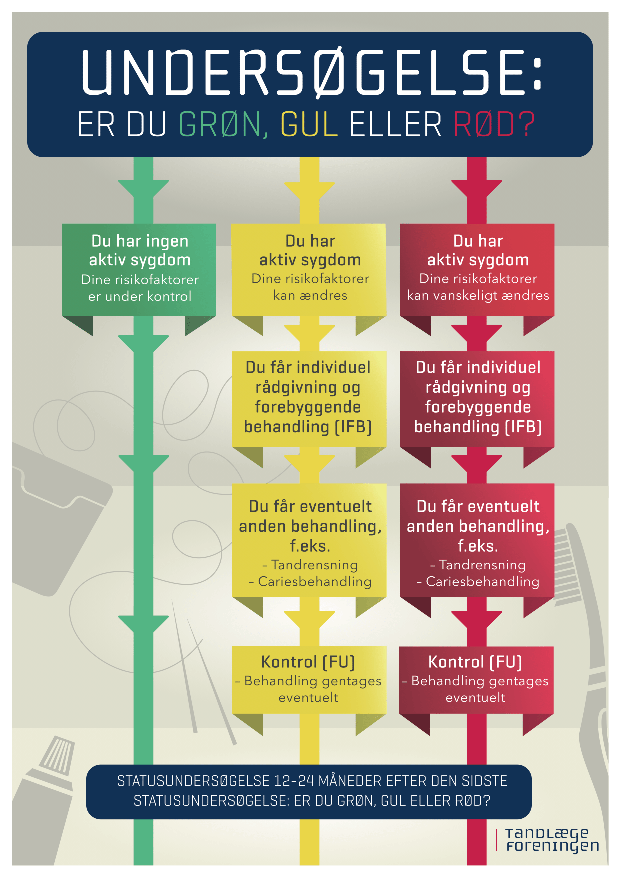
New rules at the dentist - What does it mean for me?
The purpose of the classification is to create a better basis for distributing public funding so that the healthy patient, the patient with major dental diseases requiring treatment and the patient in between are all taken into account.
Currently, everyone is reimbursed for a check-up and teeth cleaning once a year. Patients with active disease in the mouth, gums or oral cavity will, according to the new agreement, be placed in the yellow or red color track. The yellow and red patients have a greater need for treatment and therefore the possibility to receive reimbursement more than once a year.
The color trails can therefore serve as guidelines for the dentist when assessing how often the patient should come for check-ups and whether the patient may be eligible for extra reimbursement from the public sector.
How does the dentist decide if I am green, yellow or red?
When determining whether a patient belongs to a green, yellow or red shade guide, dentists can rely on a number of standardized national clinical guidelines. Roughly speaking, dentists have a checklist that, if completed correctly, will place the patient in the correct shade guide.
The assessment includes the patient's possibility/ability to change the current condition. For example, this could be a patient who has caries (tooth decay) due to not brushing their teeth properly. In such a situation, the dentist could assess that the patient is able to change their risk of new cavities if brushing and flossing are improved.
The new rules have been in effect since April 1, 2015. If you have not been to the dentist since then, you will be assigned a color track at your next visit. If you are already receiving treatment, your dentist will make sure to adjust your treatment plan to fit the new benefits.
The green patient
This patient category includes patients who do not have active disease in the teeth, gums or oral cavity in general. If you belong to this patient group, the recommendation is to come for an examination every 12-24 months. There will be a subsidy for a status examination and a dental cleaning in connection with this once a year. You can have your teeth cleaned more often if you wish, but you will not be subsidized more than once a year.
The yellow patient
A yellow stain is given to patients who have active disease in their teeth, gums or oral cavity. The yellow stain differs from the red stain in that, according to the dentist's assessment, there is a possibility that you can work with the dentist to treat and change the current condition.
One way patients could change their risk factors is to stop smoking, cut down on sweets and improve their oral hygiene. And your dentist can help you by scheduling check-ups and cleanings several times a year. If you fall into this category, you may also be eligible for reimbursement for more than one cleaning per year.
The red patient
The red patient has active disease in the teeth, gums or oral cavity and the dentist assesses that the patient is unable to modify the risk factors and change the health condition. This patient category includes patients who have a systemic general disease or are taking medication that negatively affects the oral cavity. The dentist's job is to prevent and treat and will be called in as needed. Typically, the red patient will be called in more often than the yellow patient. There will be reimbursement for prevention, treatment and control.
What will the new rules at the dentist mean for me?
In practical terms, the new rules will most likely not have any noticeable impact on you when you go to the dentist for check-ups or treatment. If you're one of those patients who need to visit the dentist more often, you may find that the cost of dental care will increase. But in the long run, it's an investment in your dental health that will pay off. The reason for frequent check-ups is to prevent and treat small problems before they develop into more serious conditions requiring treatment.
But overall, the intention is a cost-cutting exercise by the government due to ever-increasing healthcare costs.
Want to know more?
For more information about dental care subsidies, please refer to The Dental Association's website.